Rollers reseated, hinges checked for the damage a derailment hides, and the track trued against a level. Then we find what put it there.
Tell us what the door is doing. No charge to come out, and nothing to pay if you decide against it.
A door off its track is the fault we're called out for most often in Bellevue, and it's the one homeowners least expect. Nothing wears visibly, nothing sounds wrong, and then one morning the door won't lift and the car is shut in. Around Crossroads and Factoria we see it concentrated in large custom homes with three-car garages and heavy insulated doors, where persistent moisture warps wood and pits hardware.
Ten or twelve rollers carry the door inside a steel channel, and the channel is what keeps the door flat in the opening. Lose one roller out of the channel and that corner drops. The panel it belongs to twists, which levers the rollers above and below it out as well, and the failure runs up the door faster than you can get to the button.
We cover Bellevue and the towns around it - Kirkland, Redmond, Renton, Issaquah. And the price goes in writing before any work starts. There's no charge for coming out to look, and no charge if you decide against the quote.
This is the fault you can diagnose from the driveway. The two sides of the door are at different heights. There's daylight along one edge that wasn't there before. The door moves partway and then binds, or grinds instead of rolling, and you can usually see the roller sitting proud of its channel.
If any of that matches, a technician can diagnose it on site in about ten minutes. We don't guess at it down the phone, and we don't charge to look.
The door is still connected to a loaded counterbalance while it's off the track. Levering a panel back into the channel with the spring still wound is how people get hurt, and how a realignment turns into a panel replacement.
Track doesn't fail with age. Something caused it. A seized roller, a slipped cable drum, a loose bracket, or an impact. If the cause isn't found the door comes off again within weeks, which is why we look for it rather than just reseating the rollers.
It can be made to look straight. It won't run true, and the rollers will keep leaving it. A bent vertical track section gets replaced, not straightened.
None of that is unique to Bellevue. It is simply what happens when a door is quoted over the phone by somebody who hasn't seen it, and it's the reason we don't give prices before a technician has stood in front of the door.
People put this off, and it is worth being straight about where that goes. None of the following is unusual. It's the ordinary sequence, and we see it in Bellevue every week.
The visit and the written estimate are free, so finding out where you stand costs you nothing at all. That is the whole reason to call early rather than late.
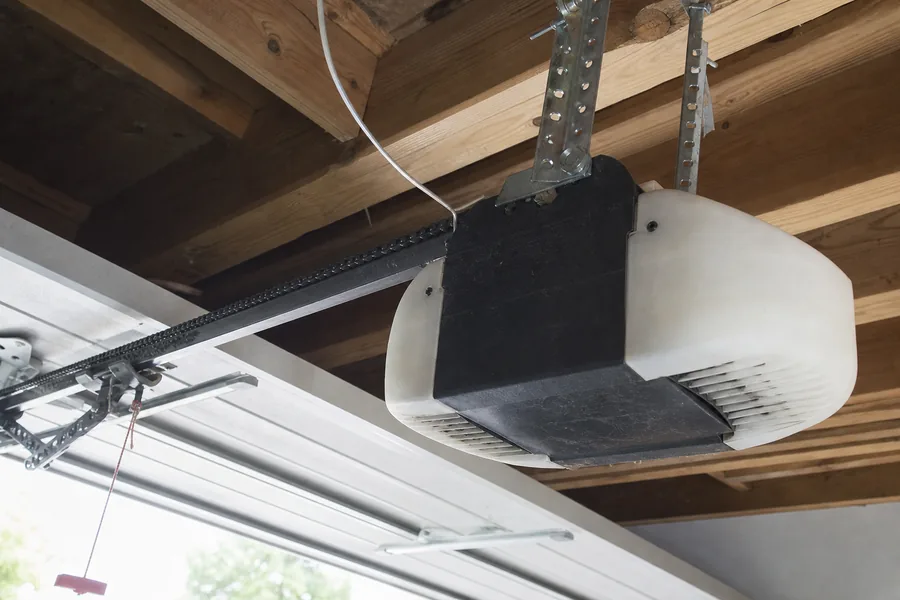
Garage door mechanisms are far more alike than the badges suggest, and the parts that fail are common across brands. These are the ones we see most in Bellevue.
| Brand | Notes |
|---|---|
| Craftsman | Built on Chamberlain internals for most of their production run, so the gear kits and boards are shared and readily available. |
| Sommer / Marantec | Less common here, direct-drive heads, and the parts have to be ordered. So we confirm the model before the van is loaded. |
| Wayne Dalton | The TorqueMaster counterbalance is a spring inside the tube rather than on it, and it needs its own tools and its own parts. We carry them. |
| Amarr | Sections and hardware are widely available and the tracking is standard, which keeps repair costs sensible. |
| Chamberlain myQ | Wi-Fi hubs and the app side fail more often than the mechanics do. Usually a re-pair rather than a replacement. |
| Overhead Door / Raynor | Standard torsion hardware on the residential lines. Nothing unusual to source. |
The model number is usually on a sticker on the side or the back of the opener head, and on a plate inside the top section of the door. Read it out when you call and the van leaves with the right parts.
Bellevue is the base and the surrounding towns are within the normal working radius. These are the areas the van is in most days:
Emergency and after-hours calls run to the same map. A door standing open overnight anywhere on that list gets somebody out.
Tracks don't wear out on their own. They come out of alignment because something happened. A car touched the door, a cable let go on one side, a roller seized and dragged, or the brackets loosened over years of vibration until the track drifted.
Realignment means lifting the door's weight off the track with the right support, seating the rollers, checking every hinge for elongated holes, and then trueing the vertical track against a level rather than by eye. Bent track sections get replaced, not hammered straight.
Nine times out of ten there's a root cause behind the derailment, and if it isn't found the door comes off again. A seized roller, a loose bracket or a cable drum that has slipped are the usual three, and the visit isn't finished until we've identified which one it was.
The difference between a job finished today and a job finished on Thursday is almost always whether the right part was on the van when it arrived. So the van is loaded for what Bellevue actually breaks rather than for a national average.
Springs in the common sizes, lift cables, drums, rollers, hinges, brackets, opener gear kits, remotes, safety sensors and weather seal all travel with the technician. Panels and complete doors are ordered, and we tell you that at the estimate rather than on the day.
It's also why the description you give on the phone matters. Tell us what the door is doing, what it sounds like, whether it's a single or a double and roughly how old it's, and the van leaves already carrying the answer.
Bellevue sits in mild wet winters, and persistent moisture warps wood and pits hardware. National failure statistics are built on a climate that's nobody's in particular, which is why a spring rated for ten thousand cycles behaves differently here than the box implies.
A cycle rating assumes clean, dry, well-lubricated travel. Everything that adds friction or corrosion spends those cycles faster than the counter says, and the door reaches the end of its rated life years before the calendar does.
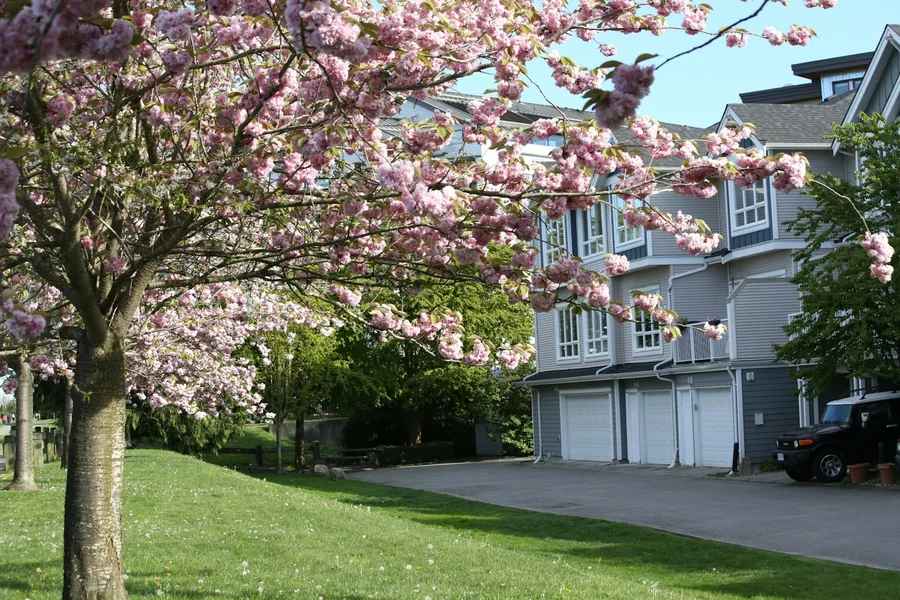
The housing stock compounds it. Large custom homes with three-car garages and heavy insulated doors dominate around Crossroads and Factoria, and those doors went in within a few years of each other, so they arrive at the end of the same service life together. We see the same failure move through a street over a season.
Two weeks a year account for a disproportionate share of what we do in King County. They're the first hard cold and the first serious storm, and both work the same way. They do not create a fault, they finish one that was already there.
A spring at eighty per cent of its cycle life survives a mild morning and fails on a cold one. A cable with three broken strands holds until the day the door is asked to move against a frozen bottom seal. The weather is the trigger, not the cause.
That is why a five-minute inspection in the fall is worth more than any product you can buy. Rust on the coils, frayed strands near the bottom brackets, and a door that will not stay put at waist height are the three things worth looking for.
If any of the three is there, it's far better dealt with on your schedule than on the morning the car is trapped behind it.

Bellevue covers Crossroads and Factoria. Not a franchise territory drawn on a map somewhere else. The actual streets the van is on most days.
You get a two-hour arrival window rather than a day, and a call before the technician sets off. If we're going to be late you hear it from us first.
The visit is free, the written estimate is free, and nothing is agreed until you have seen it in writing. If you decide against it, that's the end of it.
Yes. Card, and everything is documented in writing. Nothing is cash-only and nothing is agreed on the doorstep without it in writing.
Yes, in writing, on parts and labor. If the same fault returns inside the warranty period we come back and put it right at no charge.
Usually, yes. We hold same-day slots for Bellevue and the surrounding towns, and a door stuck open or a car shut in goes to the front of the list.
If a spring or cable has failed, no. Leave it down and don't force it. The counterbalance holds a great deal of stored energy and it can let go without warning.
Tracks don't wear out on their own. They come out of alignment because something happened. A car touched the door, a cable let go on one side, a roller seized and dragged, or the brackets loosened over years of vibration until the track drifted.
Yes - Kirkland, Redmond, Renton, Issaquah and the wider King County area are all inside our normal service radius.
Tell us what the door is doing, what it sounds like and roughly how old it's. That is normally enough to know what has failed and what the van needs to bring.
The visit is free, the written estimate is free, and there's nothing to pay if you decide against it. Bellevue, Kirkland, Redmond, Renton, Issaquah and the rest of King County.
Tell us what the door is doing and we'll give you a real arrival window. The visit and the written estimate cost nothing, anywhere in King County.
Prefer to talk it through? Call (425) 696-3671.
Tell us what the door is doing. No charge to come out, and nothing to pay if you decide against it.