Craftsman and traditional houses look their best behind a carriage-house door, and plenty of the custom homes here carry real wood. Swift Garage Door Repair installs and repairs wood, wood-overlay and wood-look carriage doors around Bellevue, with springs matched to the weight and a free estimate before anything is ordered.
Tell us what the door is doing. The estimate is free and you can say no.
Solid wood doors are built from boards and frames of cedar, hemlock or another species, stained or painted. Nothing else ages the way real wood does, and nothing else asks as much of its owner.
Overlay doors put real wood boards over an insulated steel or composite base. From the street they read as wood; behind the boards, the base keeps the section straight and holds the insulation. They are the most common choice on the larger homes here, and the heaviest.
Wood-look doors skip the wood altogether. Steel or composite skins are molded with a grain and finished in stain-like colors, so the door keeps the look without the refinishing. Up close a trained eye can tell; from the sidewalk most people cannot.
Old carriage houses had pairs of doors that swung outward. A modern carriage-house door only borrows that look: it is still a sectional door that rolls up overhead on tracks, opened by hand or by an opener like any other.
The look comes from the details. A center line that suggests two leaves meeting, vertical boards or crossbucks in the lower panels, a row of small windows across the top, and decorative handles and strap hinges fixed to the face. Those pieces are trim; the real hinges and rollers sit on the inside where they always do.
Getting the proportions right matters more than any single detail. Window spacing that lines up with the house's own windows, and trim colors that pick up the front door, are what make the door look as if it came with the house.
The top-row windows can be clear, frosted or textured, and insulated glass keeps them from turning into cold spots on a heated garage. Square, arched and divided-light layouts are all common; the one that suits the house is usually the one that echoes its other windows.
Wood and wet winters can get along, but only while the finish is intact. Water gets in where the finish fails first: the bottom edge, the end grain of boards and any joint that opens. A door under a deep roof overhang keeps its finish far longer than one facing the weather straight on.
That is why a real wood door comes with an honest conversation about upkeep. The finish needs renewing every few years, sooner on a door in full weather, and a door that is left too long starts to gray, check and soften at the bottom.
If that schedule does not suit the household, a wood-look door gives the same face with nothing to refinish, and an overlay door sits in between, with real boards on a base that stays straight when they move.
A wood or overlay door can weigh several times what a plain steel door of the same size does. That weight decides almost everything behind it: spring size, cable and drum size, how many hinges and struts the sections need, and whether the opener can move the door without straining.
It is all worked out before a door is ordered. Springs are sized to the new door's real weight rather than a catalog guess, and on a door that runs many times a day, longer-life springs are offered and explained. Where the existing opener is too light for the new door, you hear that on the estimate with the reason.
Many townhome and planned communities set the style and color of garage doors, and a carriage door is often on the approved list in a particular finish. Bring the association's guidelines, and the choice starts from them rather than ending in a rejected order.
For homes outside an association, the question is simply what suits the house. Samples come to the visit so the wood tone or the painted color is judged in the light the front of the house actually gets.
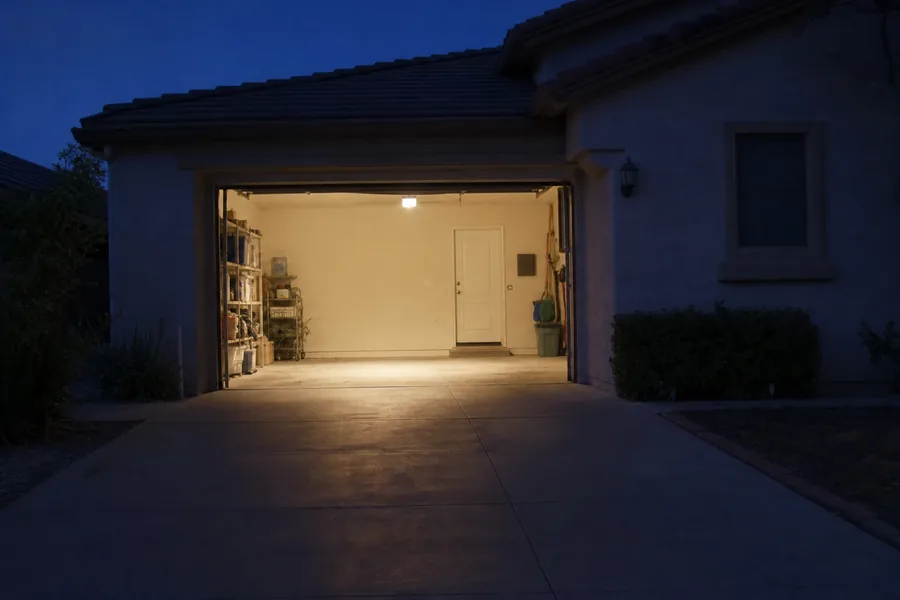
Lighting is worth a thought at the same time. Fixtures on either side of a carriage door finish the look at night, and their placement is easier to plan before the new door goes up than after.
A wood or carriage door is planned around its weight from the first visit.
Wood doors usually fail from the bottom. The lowest rail softens where water sits, overlay boards loosen as their fasteners rust, and a section that has absorbed water gets heavier and starts to sag between its hinges. Struts across a sagging section and new hinges often bring a door back into line.
Rot that has reached deep into a section is a different matter. Where the wood is still sound, it is repaired; where it is not, a replacement section or a wood-look door is written up beside the repair, so the two can be compared.
Decorative handles and strap hinges work loose over the years too, and they are tightened or replaced on the same visit.
It depends on the house and on who will keep up the finish. Real wood looks like nothing else, but it needs its finish renewed every few years. An overlay or wood-look door gives most of the look with far less upkeep.
No. It rolls up overhead like any sectional door. The swing-out look comes from the trim, the center line and the decorative hardware on the face.
Real wood boards fixed over an insulated steel or composite base. The base keeps the sections straight and insulated, and the boards give the door its wood face.
Yes. Overlay and wood-look carriage doors are commonly built on insulated bases, which helps a lot when there is a room above or beside the garage.
That depends on the door's weight and the opener's condition. It is checked before ordering, and if the opener is too light for the new door, a replacement is written up as its own line.
Often, if the rot has not gone deep. The damaged wood is repaired or the section replaced, and if the damage is widespread you see a new-door option beside the repair.
Yes. Samples, measurements and the weight calculation come first, and the free estimate is in your hands before anything is ordered.
Just a name, a number, and a line about the door. Everything before you agree to it asks nothing of you, across the whole of King County.
Want to talk instead? Call (425) 696-3671.
Tell us what the door is doing. The estimate is free and you can say no.